Incoterms 2020 is a crucial set of rules in international trade, defining the responsibilities, costs, and risks between sellers and buyers during the delivery of goods. However, many businesses and newcomers to logistics still learn Incoterms by simply memorizing the names instead of understanding their underlying principles.
It's important to remember: Incoterms do not determine ownership of goods, but only specify the point at which risk transfers and costs are divided.
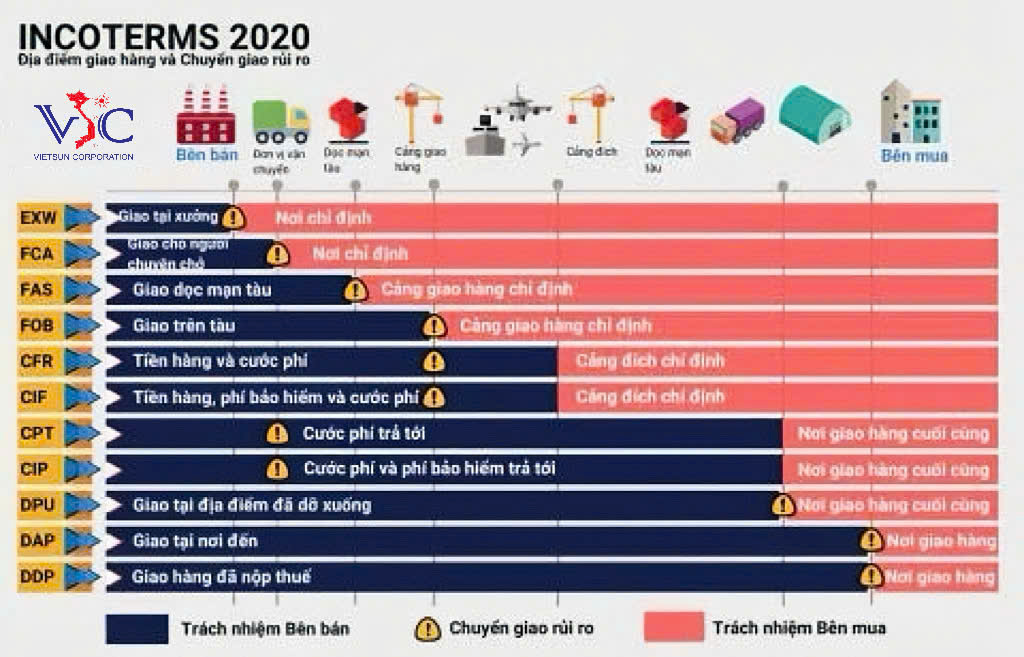
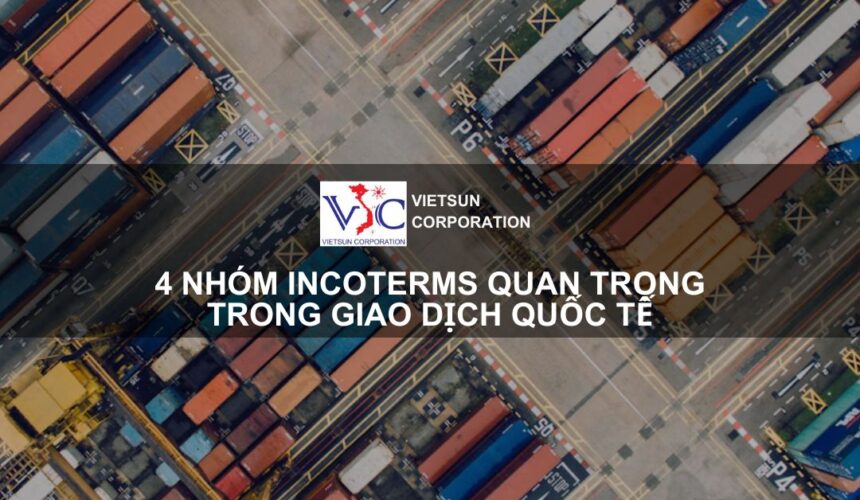
Incoterms 2020 groups based on logical thinking.
- Group E (EXW): Seller delivers goods at the factory, minimal liability.
- Group F (FCA, FAS, FOB): Buyer arranges primary transportation.
- Group C (CFR, CIF, CPT, CIP): The seller pays the freight but the risk does not extend to the final destination.
- Group D (DAP, DPU, DDP): The seller is responsible for almost the entire journey.
In practice, Vietnamese businesses often use FOB and CIF, however, FCA is the recommended term in international trade today. In particular, DDP carries significant tax and legal risks if businesses are not familiar with the regulations in the importing country.
Tips for effectively applying Incoterms
When choosing Incoterms, businesses should always ask themselves these three questions:
- Who bears the cost?
- Who bears the risk?
- Where does the transfer risk lie?
Clearly answering these three questions will help minimize most risks in logistics and import/export operations.
Vietsun We partner with businesses in consulting on Incoterms, transportation, and optimizing logistics solutions to suit their specific needs.
🌍 www.vietsunlogistic.com
Vietsun – Carrying full faith, reaching far with value