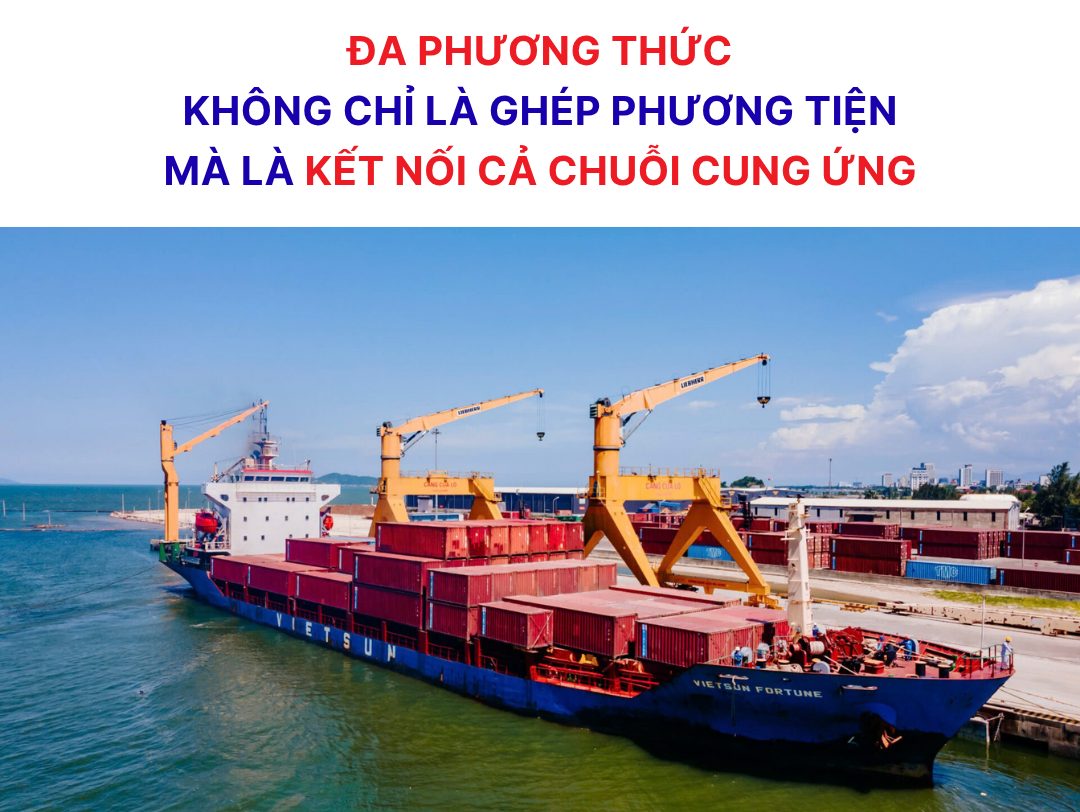
Multimodal transport has long been considered an inevitable trend in the logistics industry. However, in reality, not many businesses can operate this model effectively due to a lack of connectivity between infrastructure, data, and coordination mechanisms.
In the context of global supply chains constantly being impacted by geopolitical fluctuations, transportation costs, and delivery pressures, multimodal transport is no longer simply about combining different modes of transport. It has become a challenge in terms of organizational and operational capacity across the entire chain.
Why hasn't multimodal transport developed proportionally?
Many businesses still operate their logistics with a mindset of separating each stage of transportation. This leads to:
- Lack of data synchronization between parties.
- It is difficult to optimize the schedule and load.
- Transit costs are incurred.
- Increased risk of delays
Meanwhile, the multimodal model requires seamless connectivity between:
- Road
- Railway
- Seaport
- ICD
- Logistics center
Only when all the links in the chain operate in sync can a business optimize costs and enhance its competitiveness.
Inland container depots (ICDs) and freight stations play an important role.
Inland container depots (ICDs) and cargo terminals are not just transit points, but also "connecting nodes" that help alleviate congestion at seaports and increase the efficiency of logistics operations.
When utilized effectively, these centers help to:
- Reduce container dwell time.
- Reduce pressure on the main port.
- Increase the ability to consolidate goods.
- Optimizing interregional transportation
This also provides a foundation for businesses to implement multimodal transport in a more flexible and sustainable manner.
Multimodality is a supply chain organizational capability.
In this new era, logistics is no longer solely a transportation issue. Businesses need to:
- Data normalization
- Enhance multilateral collaboration capabilities.
- Proactive risk management
- Build a flexible operating system.
Businesses that can organize their supply chain, data flow, and decision flow efficiently will gain a long-term competitive advantage.
With a focus on developing modern logistics solutions, Vietsun partners with businesses to optimize supply chain operations, enhance connectivity efficiency, and better adapt to market fluctuations.
📩 Contact Vietsun to build a more sustainable and efficient logistics model.
👉 View services and contact us for consultation at:
🌍 www.vietsunlogistic.com
📞 028 3826 9539 | 📧 admin@vietsunlogistic.com
Vietsun – Carrying full faith, reaching far with value