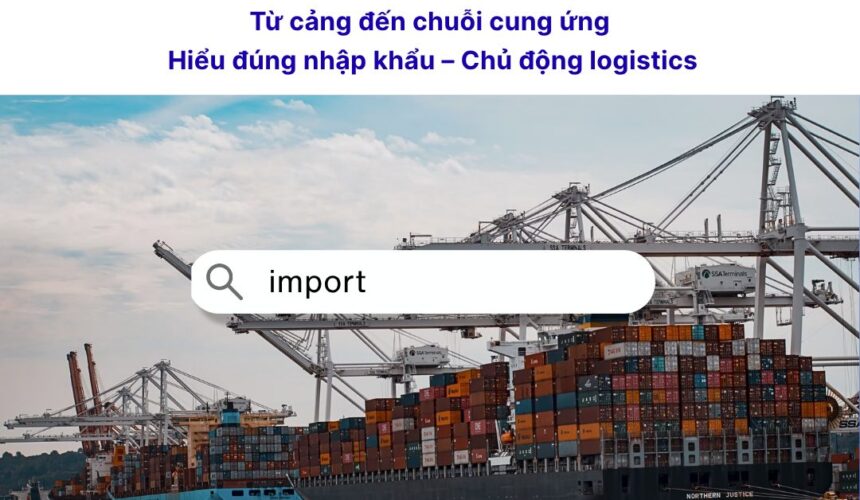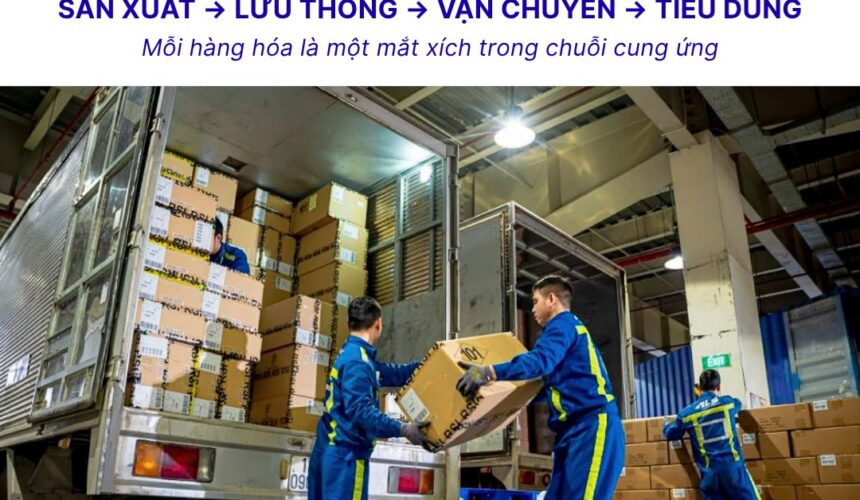
In modern logistics systems, seaports cannot handle all activities from cargo consolidation, warehousing, customs clearance to distribution. To connect seaports with production areas and domestic markets, inland container depots (ICDs) are becoming crucial links in the supply chain.
Beyond simply being a container hub, an ICD can function as an integrated logistics center, helping to bring port services further inland, reduce pressure on seaports, and promote multimodal transport.
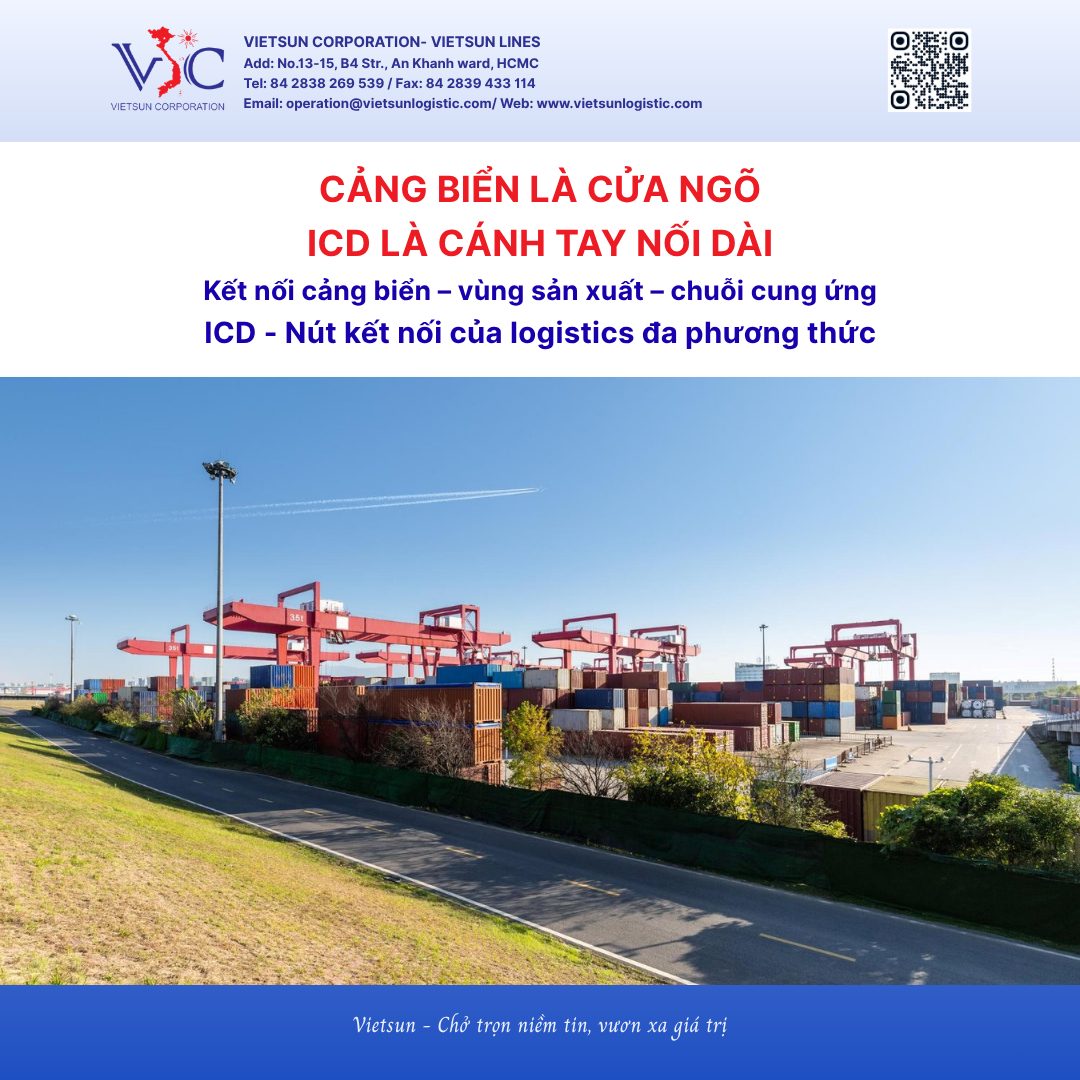
A strong seaport needs a strong logistics support system.
Vietnam has a significant advantage in its port system, with many important port clusters such as Hai Phong – Lach Huyen, Cai Mep – Thi Vai, Ho Chi Minh City, Da Nang, and other port areas throughout the country.
However, the capacity of a seaport does not depend solely on the depth of the shipping channel, the number of berths, or container throughput. For a seaport to be effective, it needs a sufficiently strong logistics support system.
That hinterland includes industrial zones, warehouses, distribution centers, roads, railways, inland waterways, dry ports, and inland container depots (ICDs).
If containers have to be transported by road amidst congestion, resulting in long wait times at the port area, or if all cargo consolidation and processing procedures are concentrated at the seaport, logistics costs will increase and port operational efficiency will be affected.
This is precisely the problem that inland ports and ICDs can help solve.
What is an ICD and what is its role?
An ICD (Inland Container Depot) can be understood as a container collection and processing point located inland, connected to seaports and the transportation network.
A modern ICD can offer a variety of services, such as:
- Container collection and storage.
- Consolidate and separate goods.
- Loading/unloading containers.
- Assistance with customs procedures.
- Inspect and handle goods according to regulations.
- Connecting road, rail, and water transport.
- Coordinate container traffic between the production facility and the seaport.
- Connecting data between businesses, shipping lines, forwarders, and logistics units.
Therefore, ICDs should not be viewed solely as inland container yards. The greater value of ICDs lies in their ability to become a logistics hub that helps to distribute cargo, container, and data flows more efficiently.
3 strategic roles of inland ports and ICDs
1. Reduce logistics costs
When inland container depots (ICDs) are located near industrial zones and production areas, businesses can shorten transportation routes, optimize cargo consolidation, and reduce waiting times at seaports.
Connecting ICDs with multiple modes of transport also facilitates the selection of options suitable for each type of goods and transport route.
2. Promote multimodal transport
Vietnam's logistics still relies heavily on road transport. While this method offers high flexibility, increased traffic volume also increases the risk of congestion, operating costs, and delivery times.
Inland container depots (ICDs) can become transit points between road, rail, and waterway transport, contributing to the redistribution of transport traffic and facilitating the development of multimodal logistics.
3. Reduce pressure on seaports.
If all containers had to be concentrated in a single seaport area for storage, consolidation, processing, and vehicle coordination, the pressure on port infrastructure would be enormous.
When a portion of operations is allocated to an Inland Container Depot (ICD), the seaport can focus more on ship handling and cargo processing, while reducing pressure at the port entrance area.
Modern ICDs require more than just container yards.
An efficient inland container depot (ICD) cannot be judged solely by its yard area or container capacity.
A modern ICD needs to have connectivity capabilities:
Goods + means of transport + procedures + data + seaport.
Businesses need to know where the container is, whether the procedures have been completed, what the shipping schedule is, which vehicle will receive the goods, and the estimated completion time.
When the ICD system is connected to seaports, customs, shipping lines, forwarders, and businesses, management goes beyond simply storing containers and extends to coordinating cargo flow and data.
This is the foundation upon which ICDs can develop into smart logistics nodes.
The location of the ICD needs to be linked to regional planning.
An in-consumer container (ICD) is only effective when it is located in a position that is suitable for the goods supply and transportation network.
The position of the ICD needs to be considered in relation to:
- Industrial zones and production areas.
- Seaport.
- Distribution and sales center.
- Road route.
- Railway.
- Inland waterways.
- Border crossings and logistics corridors.
For example, the northern region needs to strengthen connections between production areas and industrial zones with the Hai Phong - Lach Huyen port system and northern transport corridors.
In the South, the ICD network needs to be linked to manufacturing centers, industrial zones, and the port systems of Ho Chi Minh City, Cai Mep - Thi Vai, and the inland waterway network.
Meanwhile, the Mekong Delta has a great need for logistics hubs related to agricultural products, seafood, cold chain, waterways, and exports.
Therefore, the development of ICDs should be based on the cargo needs and logistics planning of each region, rather than investing in a scattered manner.
Data – the foundation of smart ICDs.
In the context of Logistics 4.0, Inland Container Depots (ICDs) cannot operate effectively using only gates and yards.
Technology helps businesses track and manage a lot of important information, such as:
- Container location.
- Customs clearance status.
- Train schedule.
- Means of transportation.
- Waiting time.
- Container condition.
- Additional costs incurred.
- Mining efficiency.
When data is interconnected between ICDs, seaports, shipping lines, businesses, and carriers, all parties can be more proactive in planning and coordination.
At the same time, data also provides a foundation for green logistics, through optimizing routes, reducing waiting times, and minimizing empty vehicle runs.
Inland ports and ICDs – the foundation for multimodal logistics.
Seaports can be seen as gateways for Vietnamese goods to the world, while inland container depots (ICDs) act as extensions, bringing port services further inland.
When in-company delivery (ICD) is properly located, well-connected to various modes of transport, and operates based on data, businesses can optimize costs, shorten transit times, and improve supply chain control.
For Vietnam, developing an Inland Container Depot (ICD) is not simply about building more container yards. It's a process of building interconnected logistics hubs with data, services, and a clear role in the multimodal transport network.
Vietsun – Connecting the links in the logistics chain
With a focus on developing transportation and logistics capabilities, Vietsun aims to effectively connect the links in the supply chain, from container shipping to port networks and logistics points.
The seamless integration of major modes of transport is fundamental to safer, more stable, and more efficient goods movement.
Vietsun – Connecting the journey of goods, accompanying the Vietnamese supply chain.
📩 Contact Vietsun to build a more sustainable and efficient logistics model.
👉 View services & contact us for consultation at:
🌍 www.vietsunlogistic.com
📞 028 3826 9539 | 📧 admin@vietsunlogistic.com
Vietsun – Carrying your trust, reaching for greater value!