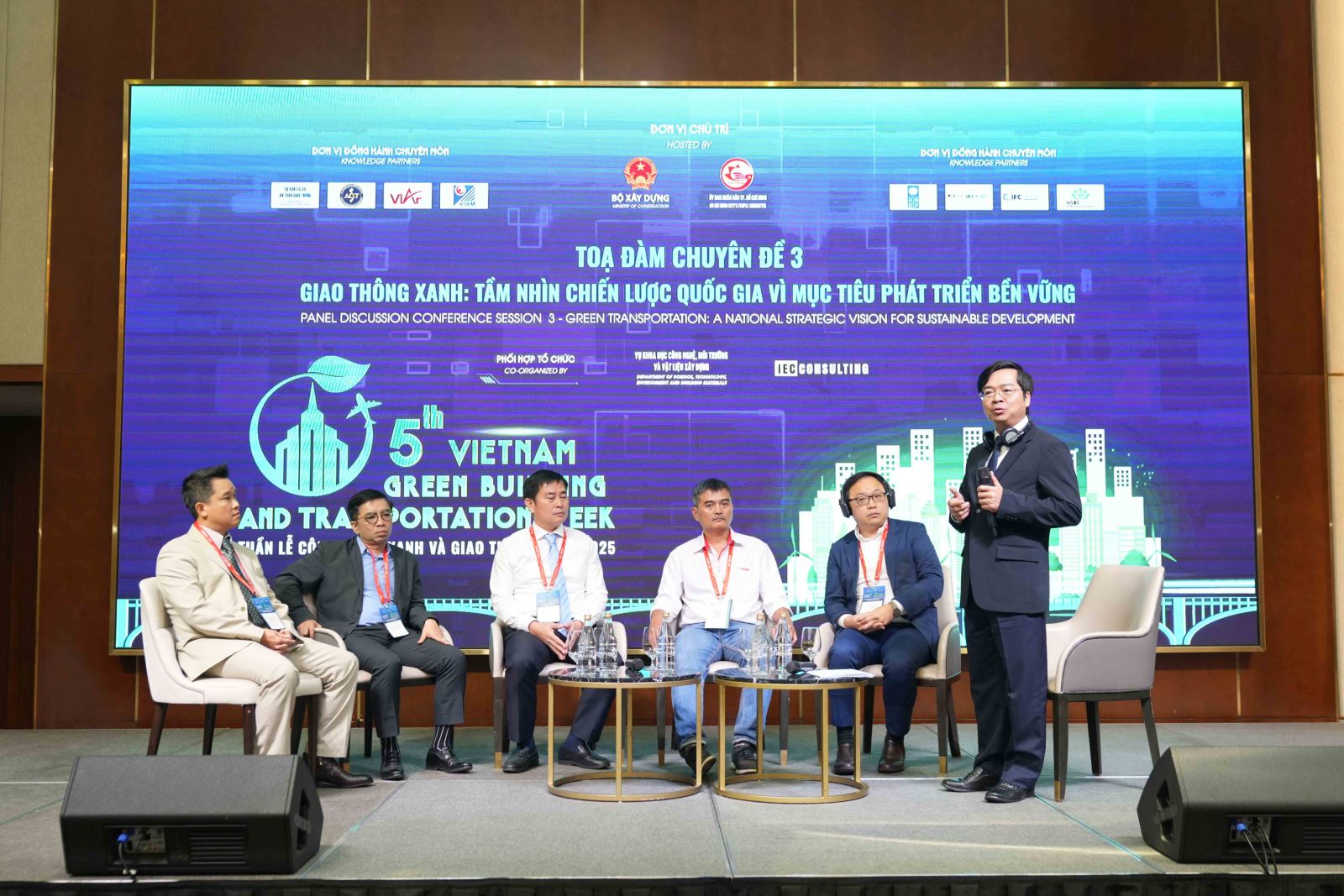
On the morning of October 29, within the framework of the Vietnam Green Building and Green Transport Week 2025, the thematic session “Green Transport: National strategic vision for sustainable development goals” attracted the participation of many experts, policymakers and domestic and foreign enterprises. Aiming for the goal of net zero emissions by 2050, Vietnam is promoting green transport strategies, sustainable infrastructure development and low-carbon logistics.
Building a national transport strategy for the period 2025-2035
Mr. Nguyen Huy Hoang, Head of Strategy and Policy Department, Academy of Strategy, Construction Cadre Training, said that the Ministry of Construction is building the Transport Development Strategy for the period 2025-2035, with a vision to 2050 (Strategy 318) to meet the requirements of socio-economic development and realize Vietnam's commitment to net zero emissions.
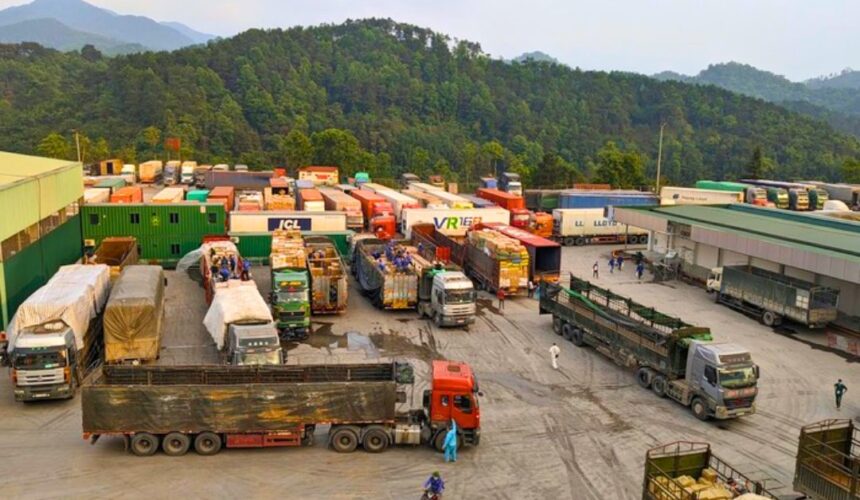
Currently, the market share of freight and passenger transport has not yet reached the target set in Strategy 318. The proportion of road transport exceeded 54% in 2020, while public transport in Hanoi and Ho Chi Minh City was only under 20%, much lower than the expected level of 30-35%.
The main reasons include incomplete institutions and legal frameworks, lack of policies to support multimodal transport, unsynchronized railway and inland waterway infrastructure, limited domestic logistics capacity and uneven digital transformation.
Mr. Hoang said that the main tasks of the new strategy will focus on 6 key tasks. These include perfecting institutions and transparent policies; prioritizing investment in modern, multi-modal infrastructure; promoting digital transformation and building a smart transport industry; developing globally competitive transport enterprises; orienting safe and environmentally friendly development; and enhancing international cooperation, making Vietnam a regional logistics hub.
Mr. Tran Tien Dung, Vice President - ESG Project Director, Vietnam Logistics Services Association (VLA), commented that developing green logistics is an inevitable trend to help businesses improve their competitiveness and contribute to the national emission reduction target.
Vietnam has issued many strong policies such as the Law on Environmental Protection 2020, Decree 06/2022/ND-CP, NDC Strategy 2022, along with regulations on greenhouse gas inventory, carbon market and carbon credits.
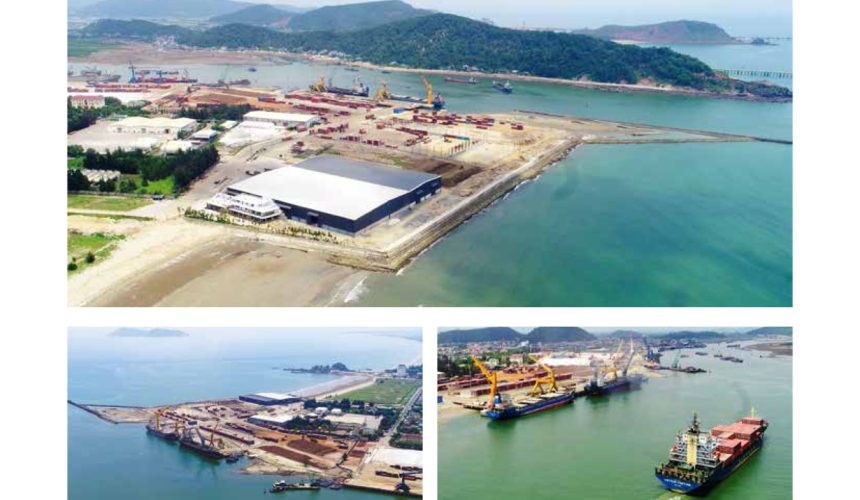
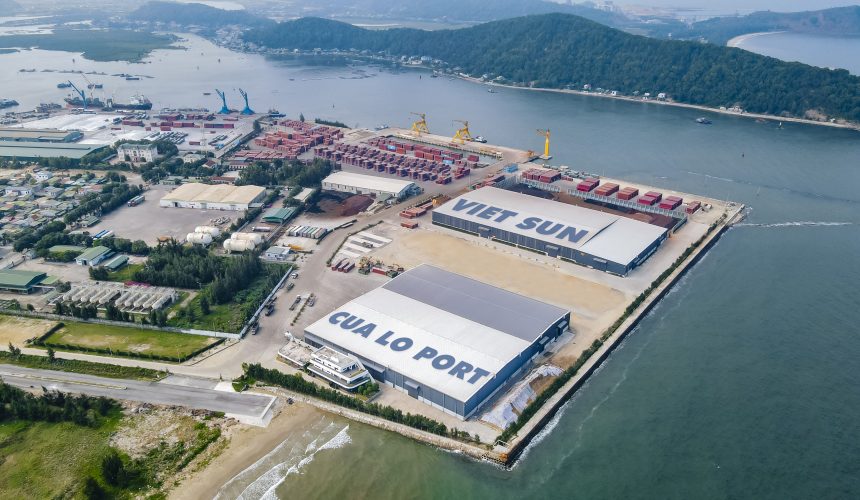
With a coastline of 3,260 km and a river network of 41,900 km, Vietnam has an advantage in developing water and coastal transport – a mode that helps reduce CO₂ emissions by more than 70% compared to road transport.
VLA recommends that the Government invest in upgrading inland waterway ports, wharves, and waterways, apply green credit policies, and exempt infrastructure fees until 2030 for goods transported by waterway.
Currently, some businesses have pioneered in this field, for example, Macstar Group operates the coastal container shipping route Hai Phong - Thanh Hoa - Ha Tinh - Da Nang, helping to reduce more than 75% of CO₂ emissions and save 10-15% of logistics costs.
Green logistics is an inevitable development trend, enhancing business competitiveness.
Notably, VLA is coordinating with the Vietnam Forestry Science Institute and Bac Kan province to implement a forest carbon credit project for the 2025-2035 period, helping to absorb an average of 750,000 tons of CO₂ per year, making a practical contribution to the goal of sustainable development.
Vietnam – A new bright spot in the global logistics chain
Mr. Ian Liew, Director of Strategy & Sustainability of YCH Group (Singapore), assessed that Vietnam is emerging as a new logistics and manufacturing hub of Southeast Asia, thanks to its strategic location, competitive costs and young, dynamic human resources.
Vietnam has strong potential to become a logistics powerhouse in the region, based on key pillars such as cost efficiency, innovation and human resources. Currently, Vietnam's logistics costs account for 16-20% of GDP, much higher than the global average of 11.6%. This is due to the inefficient and fragmented transport network. Therefore, infrastructure modernization and multimodal integration are key factors to increase the competitiveness of Vietnam's logistics.
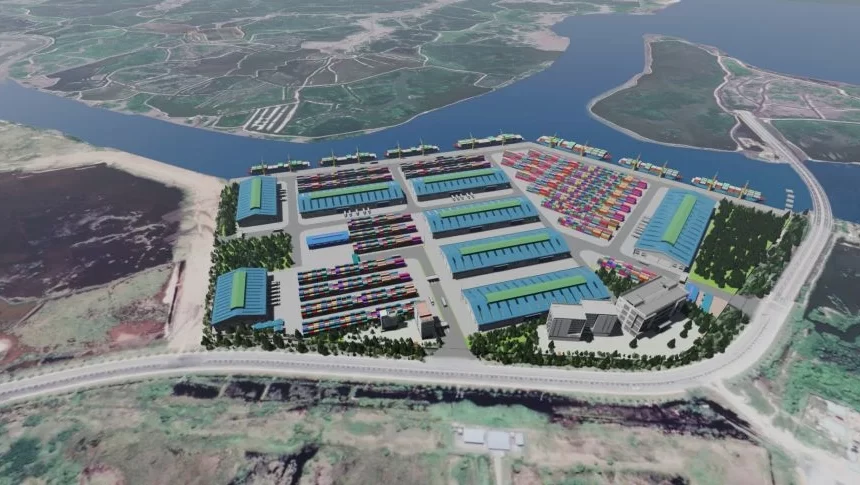
YCH is investing heavily in Vietnam SuperPort™ in Vinh Phuc, Southeast Asia’s first multimodal logistics hub connecting road, rail, air and sea, with an investment capital of 300 million USD. The project aims to become the first zero-emission logistics hub in the region, part of the SGConnect™ initiative (connecting regional supply chains) connecting China – ASEAN – Europe – America.
YCH also emphasized the importance of public-private partnership (PPP), preferential tax and land policies and developing high-quality logistics human resources through training programs in Singapore and Vietnam.
Meanwhile, Mr. Nguyen Thanh Dung, Head of Sustainable Construction Department of INSEE Vietnam, shared that the construction industry is currently one of the highest emission sectors. Of which, cement accounts for 90% of CO₂ of concrete even though it only accounts for 12% of mass.
The recommended solution is to use blended cement (PCB) instead of Portland cement (OPC), which helps reduce CO₂ emissions by up to 51% while still ensuring technical standards. This type of material has been applied in many large projects such as Phuoc An port, Cao Lanh bridge, Long Thanh airport, and southern expressways.
INSEE said its PCB products have a lower carbon footprint than OPCs by 17-51%, while also increasing durability and reducing material costs. The company proposed increased communication, policy incentives and quality standardization to expand applications in public investment projects – towards a green and low-emission construction industry.
Regarding solutions for planning and designing transport infrastructure associated with sustainable development, a representative of Arup (a British multinational corporation, specializing in providing consulting, design, engineering, architecture and planning services for the built environment) presented solutions for planning and designing sustainable transport infrastructure, emphasizing four main pillars: Reducing greenhouse gas emissions, integrating multimodality, innovating technology and bringing economic and social benefits.
Arup introduces the Transit-Oriented Development (TOD) model, which combines land use and transport planning to build compact, multi-functional cities around public transport routes, helping to reduce car dependence, boost the economy and improve accessibility.
The company also mentioned typical projects such as bike sharing in the UK and Ireland using big data, Grand Central Station (New York) using virtual reality (VR) technology, and the Texas Central high-speed railway (USA) using AR in design simulation.
In Vietnam, Arup is involved in planning Long Beach Can Gio – a green, smart urban area with a scale of 2,870 hectares and an expected population of 228,000 people. According to Arup, “integrated infrastructure, data technology and multi-sector collaboration will be the foundation for moving towards net zero emissions and building livable cities in the future”.
Mr. Vu Anh Hung, Head of OEM Solutions at Dell Technologies Vietnam, said that AI is the pillar of digital transformation in transportation. According to Dell's survey, 75% businesses consider AI/GenAI as a strategic factor, 65% have deployed it in production.
AI is used in route planning, traffic management, logistics operations, predictive maintenance, and workplace safety. Some real-world examples include WaitTime using Dell PowerEdge servers to analyze crowds at stadiums, AI Smart Total managing urban traffic in Cape Town and Puerto Rico, or AOTU BrainFrame helping reduce 90% workplace safety violations.
Dell is developing AI Factory – a comprehensive ecosystem in collaboration with NVIDIA, helping businesses shorten deployment time, reduce costs and ensure data security, paving the way for a smart – green – efficient transportation model.
Follow Vietsun's website and associated platforms to learn more knowledge in the field of logistics.
#Vietsun #JapanVietnam #Logistics #LogisticsVietNam #Sea Transport # Domestic Transportation #VanChuyenHangHoa
📞 Hotline: 028 3826 9539 or contact Vietsun customer care staff
📧 Email: admin@vietsunlogistic.com
🌍 Website: www.vietsunlogistic.com
Vietsun – Transport full trust, reach out values