The North-South expressway will be fully operational from Lang Son to Ca Mau, Long Thanh airport will welcome its first technical flight, and a series of railway and seaport projects are expected to start in 2025.
Exceeding the 3,000 km highway target.
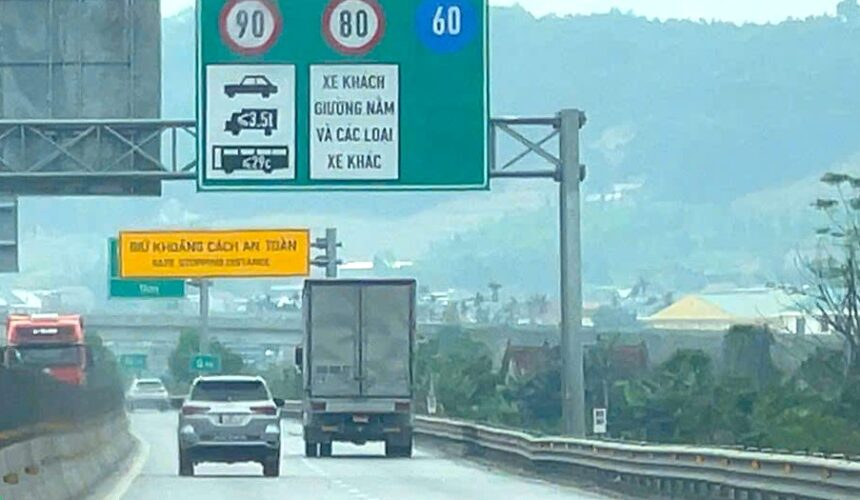
2025 marks a major step forward for the eastern North-South expressway network. A series of North-South expressway projects in phase 2 (2021-2025), passing through the South Central region and the Mekong Delta, were technically opened to traffic on December 19th, bringing the trans-Vietnam expressway axis seamlessly connected from Lang Son to Ca Mau.
Along with the main north-south axis, regional connecting expressways such as Bien Hoa – Vung Tau, Khanh Hoa – Buon Ma Thuot, Chau Doc – Can Tho – Soc Trang also create many important milestones, forming new transportation corridors for the Central Highlands and the Southern key economic region.
In the two major cities, Ring Road 4 (Hanoi) and Ring Road 3 (Ho Chi Minh City) are entering their peak construction phase, with some sections expected to open for technical traffic as early as this year.
According to the Ministry of Construction, by the end of 2025, the whole country will have completed 3,803 km of expressways (including 3,345 km of main routes and 458 km of access roads), exceeding the target of 3,000 km of expressways. This is a significant step forward compared to the periods 2001-2010 (89 km) and 2011-2020 (1,163 km). In the last five years alone, the transport sector has completed approximately 2,000 km, nearly double the amount completed in the previous ten years.
Deputy Minister of Construction Le Anh Tuan acknowledged that putting more than 3,000 km of expressways into operation is a "great achievement," a testament to the results of strategic infrastructure development and the determination to build a modern country. This journey is seen as a "revolution" in management thinking and a "training ground" for forging the aspirations of the Vietnamese people.
With a planned expansion to 5,000 km by 2030, the modern transportation system will become the foundation for national logistics development, promoting suburban urbanization and enhancing Vietnam's international competitiveness.
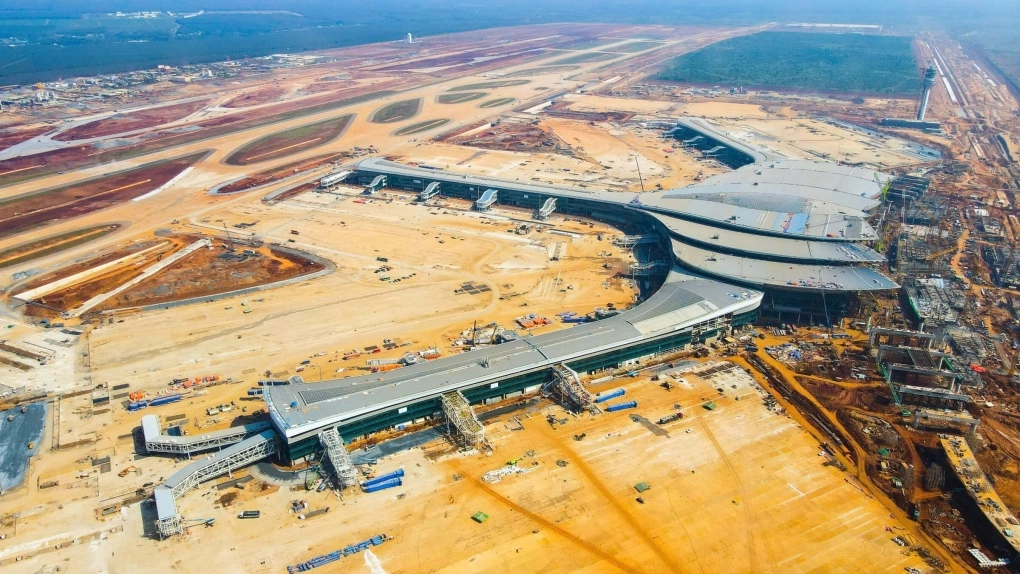
Long Thanh Airport will alleviate congestion at Tan Son Nhat Airport.
In the aviation sector, 2025 will see projects directly impacting the operational capacity of the country's largest gateways. On December 15th, the Long Thanh airport mega-project welcomed its first technical flight, preparing for official operation in mid-2026. It is expected to become an international transit hub, easing pressure on Tan Son Nhat airport and elevating Vietnam's position in the regional aviation network.
In Ho Chi Minh City, Tan Son Nhat Terminal 3, with a designed capacity of approximately 20 million passengers per year, is also scheduled to be operational in 2025. Serving primarily domestic flights, Terminal 3 helps to separate passenger traffic from the existing Terminal 1, increasing the total airport capacity to approximately 50 million passengers per year. This progress significantly reduces congestion in the parking areas, terminals, and surrounding connecting roads.
In the North, Noi Bai Airport's T2 terminal has also completed its expansion, meeting the strong growth of the international market and maintaining its role as the largest international air gateway in the North.
Besides public investment, 2025 will see a strong return of private capital with airport projects such as the Quang Tri Airport, the Phu Quoc expansion, and the Gia Binh Airport (Bac Ninh). The Gia Binh project has a total investment of 195,000 billion VND, aiming for a capacity of 30 million passengers by 2030 and 50 million by 2050.
Railways and metro lines launch simultaneously.
Besides aviation and road transport, the railway and port sectors have also witnessed landmark developments. On December 19th, the Lao Cai – Hanoi – Hai Phong railway project, with a total investment of over 203,000 billion VND, commenced construction. This is considered a strategic transport axis, connecting the economic corridor from the northern border directly to major seaports.
In cities, urban rail (metro) systems are also accelerating after years of stagnation. Hanoi has begun implementing Line 2 (Nam Thang Long – Tran Hung Dao) and Line 5 (Van Cao – Hoa Lac). Meanwhile, Ho Chi Minh City has started construction of Metro Line 2 (Ben Thanh – Tham Luong) and the Ben Thanh – Can Gio line.
In particular, the North-South high-speed railway project has been included on the agenda to clarify investment options, timelines, and the roles of the State and businesses in attracting social capital. Although it has not yet entered the official construction phase, shaping policies, building resettlement areas along the route in many provinces and cities, and land clearance are considered important prerequisites for this key national project.
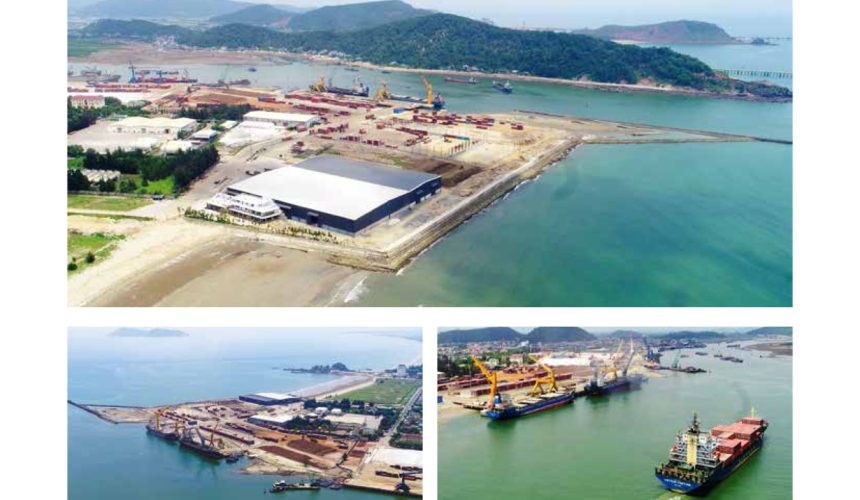
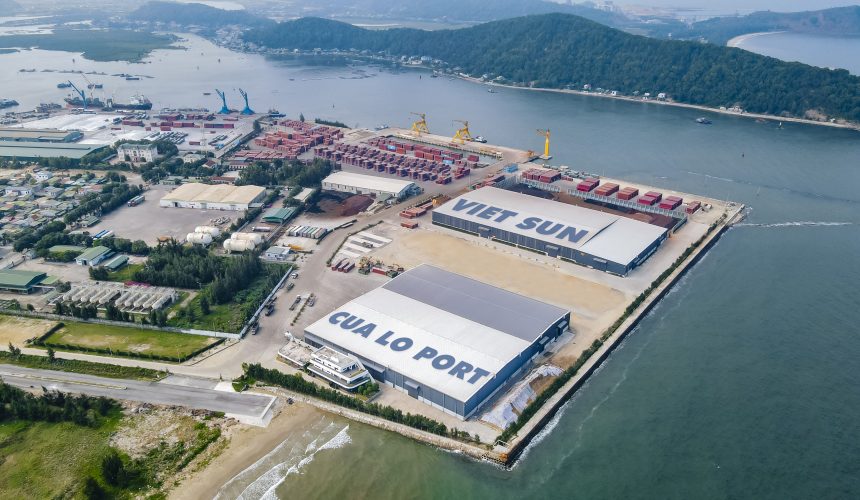
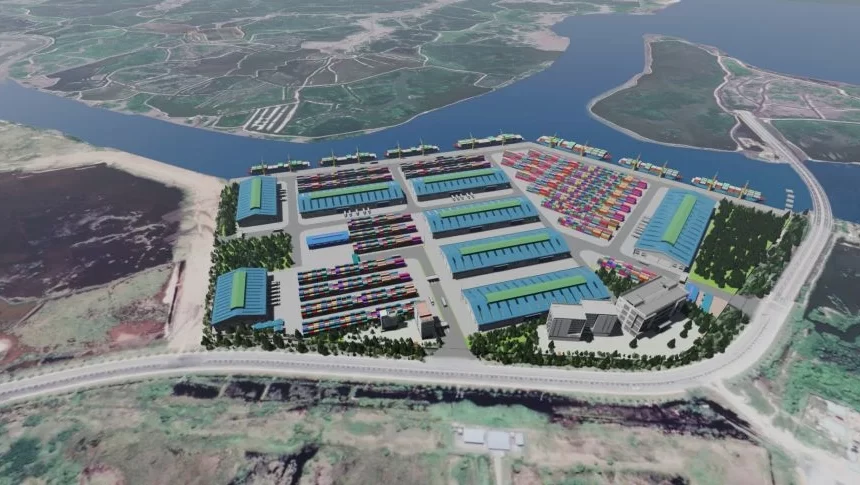
The port sector is experiencing breakthroughs in all three regions of Vietnam.
In the North, container terminals No. 5 and 6 at Lach Huyen Port (Hai Phong) have commenced operations. With the capacity to receive the world's largest container ships, the port allows Vietnamese export goods to go directly to Europe and the US without transshipment.
In Central Vietnam, Lien Chieu Port (Da Nang) is implementing key projects to become a "super" container port, expected to open up new logistics opportunities for Central Vietnam and the East-West economic corridor.
In the South, the Cai Mep – Thi Vai port complex continues to expand its channel and increase its depth. The ability to accommodate large vessels of 160,000 to 200,000 DWT enhances its operational capacity and affirms its position as an international transshipment gateway port.
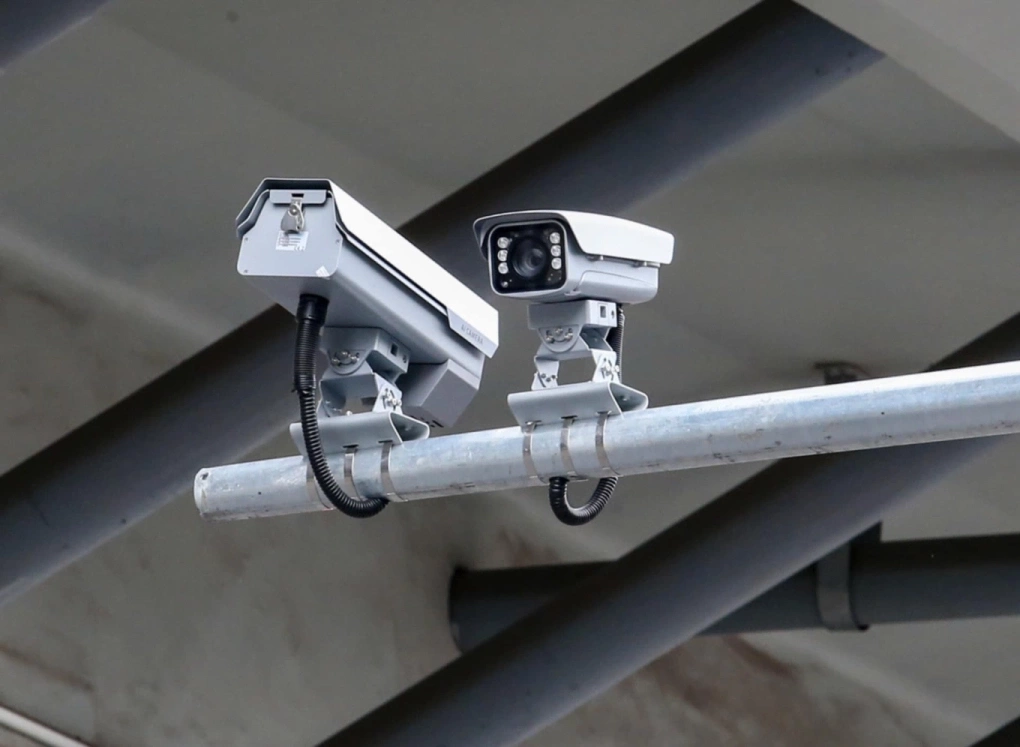
Digital infrastructure helps manage urban traffic.
Hanoi and Ho Chi Minh City are simultaneously boosting investment in traffic monitoring systems using cameras and digital technology, considering this a crucial pillar of smart urban infrastructure. The system not only helps detect violations and analyze traffic flow but also supports real-time traffic management and provides a foundation for advanced management solutions.
In Hanoi, the city's police force has installed over 1,800 new AI cameras along ring roads, radial routes, and key intersections. These "all-seeing eyes" are capable of 360-degree scanning, facial recognition, license plate recognition, and detecting 20 common traffic violations from a distance of 500 to 700 meters. The capital aims to have over 40,000 cameras installed nationwide by 2030, including more than 16,000 specialized cameras for traffic safety, environmental management, and urban order.
Meanwhile, Ho Chi Minh City has also deployed dozens of AI cameras on central roads and accident hotspots to automatically record traffic violations. Besides issuing fines, data from this system is used to analyze traffic flow, helping authorities regulate traffic and reduce congestion.
Bottlenecks
Although the transportation infrastructure landscape in 2025 shows many positive developments with total public investment remaining at a high level, many bottlenecks still exist, directly affecting the progress and effectiveness of investment.
Land clearance continues to be the biggest challenge. According to the Ministry of Construction, many key projects have sufficient funding and completed technical designs but cannot be implemented simultaneously. The main reasons are obstacles related to land compensation prices, a lack of resettlement funds, and delays in handing over cleared land.
In projects such as the Huu Nghi – Chi Lang expressway, Bien Hoa – Vung Tau expressway, Khanh Hoa – Buon Ma Thuot expressway, or the ring roads of Hanoi and Ho Chi Minh City, delays in land handover prevent contractors from working continuously, leading to increased costs and the risk of project delays.
Furthermore, the lack of coordination after investment is reducing operational efficiency. Many expressways, upon completion, still lack rest stops and connecting roads to residential and industrial areas; some sections lack emergency lanes, posing potential traffic safety risks. In the aviation sector, new airports and terminals are not yet closely connected to the public transport network, and the slow deployment of transit systems continues to put pressure on road transport.
At the urban level, Hanoi and Ho Chi Minh City still face the problems of traffic congestion, pollution, and flooding, despite total infrastructure investment reaching tens of trillions of VND each year. The density of private vehicles increases by an average of 8-101 cubic meters per year, while the high-capacity public transport system, especially the metro, develops slowly and lacks connectivity. The reality shows that infrastructure investment needs to be accompanied by synchronized urban governance to create breakthroughs in efficiency and improve the quality of life for residents.